
Teaching and Technology
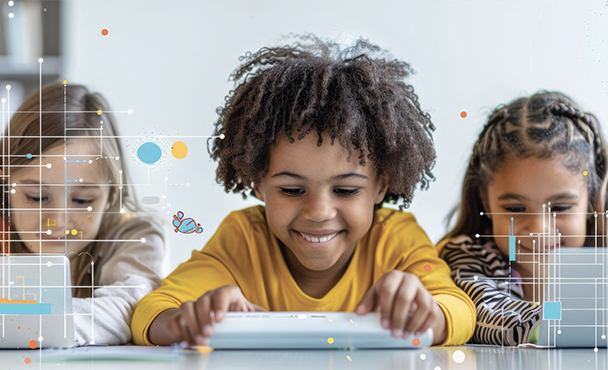
How AI and Other Tools Are Changing Education
By Wendy Little
In recent years, technology has become an inseparable part of the modern educational experience. From artificial intelligence (AI) to online learning platforms, there’s no question that technology offers unprecedented opportunities for engagement, learning, and growth.
But as modern technology continues to expand in our schools, it raises crucial questions about excessive screen time, socialization, privacy, and the precise role of AI in the classroom.
Too Much Screen Time?
The concept of 1:1 devices (one device per student) has become a hallmark of technology in education, ensuring that each student has access to their own digital tool, such as a laptop, tablet, or Chromebook, to complete assignments, engage in research, and access online resources.
These devices offer students personalized access to digital content, enabling a more tailored learning experience. Additionally, they help students become more digitally literate, providing them with the tools to critically evaluate information and communicate effectively online. This is invaluable in preparing them for the workforce, which increasingly demands technological proficiency.
Meanwhile, research has pointed to possible links between unrestricted screen use and issues like reduced attention spans, disrupted sleep patterns, and other issues. “Increased screen time can lead to emotional and behavioral problems,” according to a 2025 study published by the American Psychological Association. What’s more, “kids with those problems often turn to screens to cope,” creating a vicious cycle, the study continued.
Will AI Replace Our Teachers?
In a few short years, AI has already begun revolutionizing the way students learn. AI-powered educational tools like adaptive learning platforms and virtual tutors use algorithms to analyze students’ learning patterns, identify their strengths and weaknesses, and adjust lessons accordingly. Programs like Khan Academy, DreamBox, and Squirrel AI can modify math lessons in real time based on a student’s performance.
For teachers, AI tools can help save time and improve classroom efficiency. They can access real-time data on students’ progress, allowing for better-informed decisions about lesson plans and interventions. AI can also assist with administrative tasks, enabling educators to spend more time on direct instruction rather than grading and paperwork.
But these tools can also cause problems. According to a report released last year by the Center for Democracy and Technology, 71% of teachers said the use of AI forced them to try to determine whether students were doing their own work or using AI to do it for them.
But the rise of AI also raises questions about its role in education. One of the biggest concerns is whether AI will reduce the need for human interaction in the classroom. Half of the students surveyed in the Center for Democracy and Technology report said that using AI made them feel less connected to their teachers. While AI can personalize learning, it can’t replace the emotional intelligence, mentorship, and guidance that teachers provide.
Pros and Cons Of Online Learning
Online learning platforms have gained tremendous popularity in recent years, especially during the COVID-19 pandemic. With platforms like Zoom and Google Classroom, students can attend classes virtually and access course materials and submit assignments online. These platforms also allow for asynchronous learning, where students can engage with content at their own pace.
Online learning offers an opportunity to reach students in remote or underserved areas who may not have access to traditional educational resources. It can also provide flexibility for students with unique learning needs, allowing them to engage with lessons in a way that suits their individual pace and style, which can be especially helpful in public schools, where large class sizes and diverse needs can make personalized instruction difficult.
While online learning has its benefits, it also raises concerns about engagement and socialization. Studies show that during the pandemic, students struggled to stay motivated when learning remotely. Additionally, the digital divide—disparities in access to technology and the internet—can create inequalities in education,
particularly for public school students
from low-income families.
Concerns About Privacy
As technology continues to shape the classroom, schools are also adopting classroom management tools to help educators monitor and guide student behavior and learning. Programs like GoGuardian, ClassDojo, and LanSchool enable teachers to track students’ activity on their devices in real time, ensuring that they remain focused on educational tasks. These tools can block distracting
While online learning has its benefits, it also raises concerns about engagement and socialization. websites, send notifications to students, and alert teachers when a student is off-task.
But the use of such tools raises important questions about privacy and autonomy. While classroom management software can be helpful in maintaining a focused learning environment, there’s a fine line between effective monitoring and overly invasive surveillance. In public schools, where students’ privacy is protected by various regulations, it’s important for schools to use these tools in a way that respects students’ rights while ensuring that the technology is being used productively.
Striking the Right Balance
The future of education lies in blending technology with traditional teaching methods. Many schools—both public and independent—are beginning to adopt a hybrid model that combines digital and in-person learning. This approach allows for greater flexibility, giving students the freedom to learn through a variety of media. Whether it’s a flipped classroom model, where students review content at home and engage in hands-on learning at school, or the integration of gamification, virtual reality, and interactive simulations, the possibilities for enhancing education through technology are vast.
As technology continues to shape the classroom, it can be both a helpful tool and a potential source of distraction for your child. It’s important that schools strike a balance between leveraging technology to enhance learning and ensuring that it doesn’t overshadow the vital role of human connection, critical thinking, and creativity. By being mindful of how technology is used and prioritizing its positive impact, educators, parents, and administrators can help foster a learning environment that embraces the best of both worlds—technology and the human touch.
What Can Parents Do?
Here are some ways parents can help to promote responsible technology use outside of school.
1. Set clear rules to limit your child’s entertainment-related screen time.
2. Make sure school-issued devices are used for educational purposes only.
3. Ensure that screen time is balanced by personal interaction and physical activity.
4. Talk to your child about how to properly use AI for school assignments.